

What Is Preventative Botox, and How Is Baby Botox Different?
Wrinkles generally develop in two stages. Dynamic wrinkles appear only when you make an expression, such as smiling, frowning, or squinting, and disappear once your face is at rest. Over years of repeated muscle contraction, some of these fine lines can become static, meaning they stay visible even when your face isn’t moving.
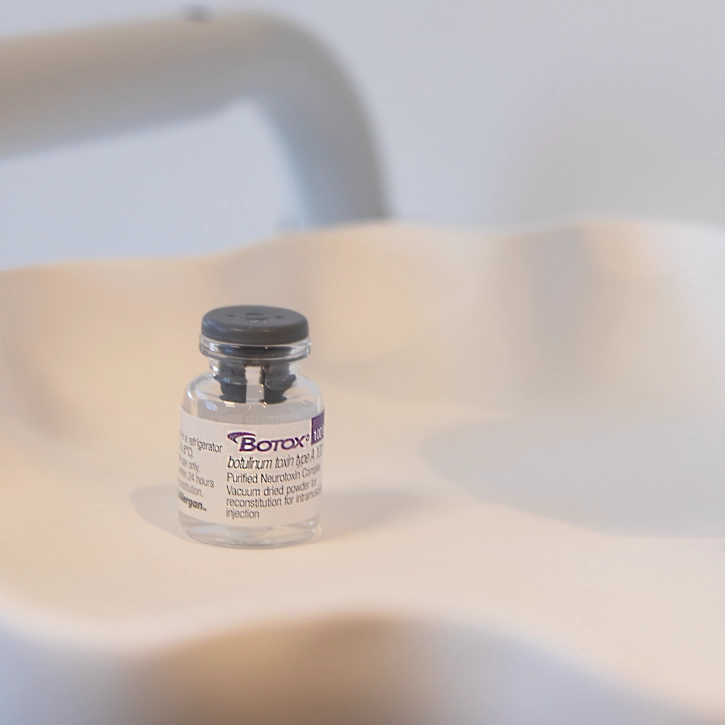
Botulinum toxin, commonly known as Botox, works by temporarily blocking the nerve signal (acetylcholine) that tells a muscle to contract. Reduced repetitive muscle contractions minimise skin creasing and wrinkle formation over time. This is the mechanism behind both corrective treatment, used to soften wrinkles that are already visible at rest, and the preventative approach, used earlier to reduce the intensity of movement before deeper lines set in.
Baby Botox describes a specific approach within this: smaller, precisely placed doses aimed at softening muscle activity just enough to reduce creasing, while preserving natural facial expression. It’s a common starting point for people in their 20s and early 30s who want a subtle result rather than a dramatic change, and the dose is usually adjusted over time as needs evolve.

Why Do People Start Considering Botox Treatment Earlier?
A few overlapping factors tend to come up in this conversation:
- Collagen and elastin, the proteins that help skin stay firm and bounce back after movement, gradually begin to decline from the mid-20s onward. This is a normal part of ageing, and you can read more about the underlying process in our guide to the science of skin ageing.
- New Zealand’s high UV environment is a well-recognised contributor to visible skin ageing, alongside genetics, smoking, and overall sun exposure over a lifetime.
- Naturally strong or expressive facial muscles can accelerate how quickly dynamic wrinkles become static ones.
None of this means injections are necessary at a particular age. It simply explains why some people choose to start the conversation earlier than previous generations typically did.
Should You Start Preventative Botox Treatment in Your 20s or Your 30s?
There isn’t a universal answer, it is completely up to the individual. What matters more than your exact age is how you feel about what your skin and expression patterns are actually doing. Here is how your skin responds through different ages:
In Your 20s
Most people in their early-to-mid 20s don’t yet have static wrinkles, and dynamic lines usually smooth out fully once the face relaxes. For many, there’s no pressing reason to start this early. Some choose a low-dose, preventative approach if they have particularly expressive facial muscles or notice lines beginning to linger, but this remains a personal choice.
In Your 30s
This is when many people first notice fine lines that take a little longer to fade after an expression, particularly around the forehead, between the brows, or at the outer corners of the eyes. For people in this position, preventative treatment can be introduced as part of a broader, personalised skin plan, alongside sun protection and a suitable skincare routine.
In Your 40s and Beyond
Starting later remains an effective, well-established option at any adult age for softening both dynamic and static lines. The main difference is that more established wrinkles may benefit from a combination approach, for example alongside laser treatments.
The Bottom Line
There’s no single correct age to start preventative Botox. For many people, the late 20s to early 30s is when the conversation naturally becomes relevant, as early fine lines and expression patterns start to show. But the honest answer is that this decision should be guided by your own skin, your own goals, and a proper consultation, not a number on a calendar.
If you’re curious whether preventative treatment, baby Botox, or another approach makes sense for you, the most useful next step is an assessment with a skin specialist who can talk you through your options without pressure. You can learn more about the treatment itself on our Botox and Dysport injections page, or book a consultation with Anue’s dermatologist-led team to discuss what’s right for your skin.
Disclaimer
Botox® is a prescription medicine for the treatment of frown lines, horizontal forehead lines, crow’s feet round the eyes and primary axillary hyperhidrosis. Botox® has risks and benefits.
Ask your doctor if Botox is right for you. If you have side effects, see your doctor. You will need to pay for Botox® and clinic fees will apply.
For details on precautions & side effects consult your healthcare professional or the Consumer Medicine Information (CMI) at www.medsafe.govt.nz.
Botox® treatment lasts about 4 months and further courses of
treatment may be necessary. Should only be administered by trained medical professionals.
Contains botulinum toxin A 50, 100 & 200 units.
Allergan (NZ) Limited, Auckland.