

What has happened to the ozone layer hole?
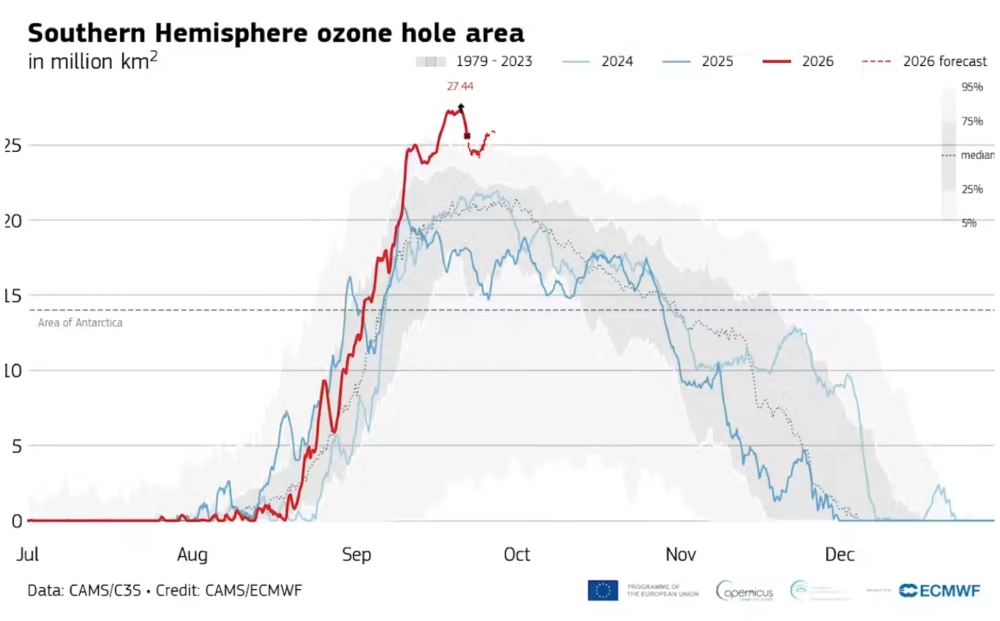
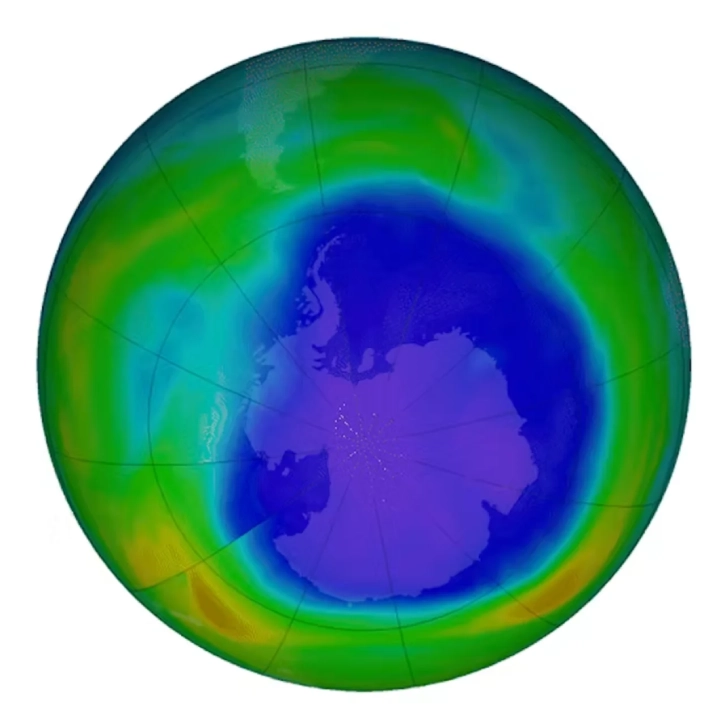
According to University of Otago and Earth Sciences New Zealand researchers writing in The Conversation, the hole peaked at more than 27 million square kilometres in September 2026. The same analysis was also covered by RNZ.
A few details put the headline in context:
- The hole began growing earlier than average in August, alongside very cold temperatures in the stratosphere.
- A strong polar vortex, the ring of winds that circles Antarctica each winter, helped drive the rapid growth.
- The researchers say they flagged the likelihood of a major event months earlier, and observations have matched their predictions.
- Levels of the chemicals that damage the protective layer have fallen by about a third since their peak around the year 2000.
- Despite its large area, this year’s hole is not as deep as some earlier large ones, which means less of the protective gas is missing overall.
- The long-term outlook is still recovery, with full recovery projected before 2090.
In other words, this is a bad year for the ozone layer hole within a slowly improving picture, not a reversal of it.
SuppliedCAMSECMWF CC BY SA
Does the ozone layer hole make Auckland’s UV worse?
This is the question most people actually want answered, and it deserves a careful response.
The atmospheric layer in question absorbs much of the sun’s harmful ultraviolet radiation. The ozone layer hole, however, sits over Antarctica.
What we do know does not depend on this year’s hole. New Zealand already has strong UV, as a country we have one of the highest rates of skin cancer in the world. That is why no matter what the daily UV forecast, it is best to protect your skin. For more information about sunscreen protection, here is the definitive guide to sunscreen by Skintel a leading skin cancer clinic in Auckland.
How does UV exposure affect your skin over time?
UV damage is cumulative. Most of it builds quietly over years, long before it becomes visible. Over time, UV exposure may contribute to:
- Fine lines, wrinkles and a rougher texture, often called photoageing
- Sun spots and uneven pigmentation, and a tendency for conditions like melasma to flare
- Persistent redness and visible small blood vessels
- An increased risk of skin cancer
Our guides to the science of ageing and to skin pigmentation explain how these changes develop and what can be done about them.
What is the best sunscreen routine for Auckland?
The best sunscreen is the one you will actually use, correctly and consistently. A practical routine looks like this:
- Apply a broad-spectrum sunscreen of SPF 50+ or higher every morning, including on cloudy days, as UV can still reach you.
- Use a generous amount on your face, neck, ears and wherever your skin is exposed. Thin application gives less protection.
- Reapply when outdoors, and after swimming or sweating. Follow the application guidelines of your chosen sunscreen.
- Treat sunscreen as one layer, not the whole plan. Hats, sunglasses, shade and clothing all reduce exposure.
If you are unsure which products suit you, our team offers cosmeceutical assessments, and you can browse the Anue store for sunscreen and other skin care options.
What else belongs in a sun-smart skin care routine?
Sunscreen does the heavy lifting, but the rest of your skin care routine matters too.
- Cleanse gently. Stripping the barrier can leave it more reactive to sun and irritation.
- Moisturise. A well-hydrated barrier tends to look and feel healthier.
- Reapply Sunscreen. SPF wears down throughout the day, reapply regularly to maintain protection.
- Repair after summer. A skin care review after a high-exposure season can help you decide whether any treatment is worthwhile. A full body skin cancer check is worth considering to assure you have not accumulated and skin cancers.

Where do Botox and anti-wrinkle injections fit in?
Many of our patients researching Botox and Dysport ask whether they can offset the effects of the sun. It helps to be clear about what each approach does.
Can Botox repair sun-damaged skin?
No. Anti-wrinkle injections are designed to relax the muscles that create expression lines, such as frown lines, forehead lines and crow’s feet. They do not protect against UV or repair sun damage, and they are not a substitute for sunscreen.
What they can do is soften movement-related lines, which may help you look rested and natural when dosed appropriately by an experienced practitioner. Daily sun protection then supports your wider skin care around them.
What helps with sun-related changes in texture and pigment?
Sun damage tends to show up as pigment, redness and texture rather than as expression lines. Options a dermatologist may discuss include IPL for pigment and redness and fractional CO2 laser for fine lines and texture. Suitability, downtime and expected outcomes vary between people, which is why a personalised assessment comes first.
If you are concerned about accumulated sun damage more broadly, our page on laser to prevent skin cancer outlines one option your dermatologist may raise with you.
When should you see a professional?
Sun protection is prevention, not diagnosis. If you are concerned it is best to see a skin cancer dermatologist. Signs to watch for are:
- A new spot, or a mole that changes in size, shape or colour
- A sore or scaly patch that does not heal
- Any lesion that itches, bleeds or looks different from the surrounding area
The takeaway for your skin
The ozone layer hole is a striking reminder of how closely our atmosphere is tied to our daily health, but the practical advice has not changed. Wear sunscreen every day, cover up and have changes checked early. Recovery of the protective layer is under way, though it will take decades.
If you would like personalised advice, our dermatologist-led team can assess your concerns, discuss sun damage and talk through whether treatment is appropriate for you. You can explore our treatments or book a consultation at our North Shore clinic.

Disclaimer
Botox® is a prescription medicine for the treatment of frown lines, horizontal forehead lines, crow’s feet round the eyes and primary axillary hyperhidrosis. Botox® has risks and benefits.
Ask your doctor if Botox is right for you. If you have side effects, see your doctor. You will need to pay for Botox® and clinic fees will apply.
For details on precautions & side effects consult your healthcare professional or the Consumer Medicine Information (CMI) at www.medsafe.govt.nz.
Botox® treatment lasts about 4 months and further courses of treatment may be necessary. Should only be administered by trained medical professionals. Contains botulinum toxin A 50, 100 & 200 units.
Allergan (NZ) Limited, Auckland.